
Witness the divine celebrations, ancient rituals, and vibrant gatherings that define the soul of Devbhoomi.
Join us in these timeless traditions that bring communities together.
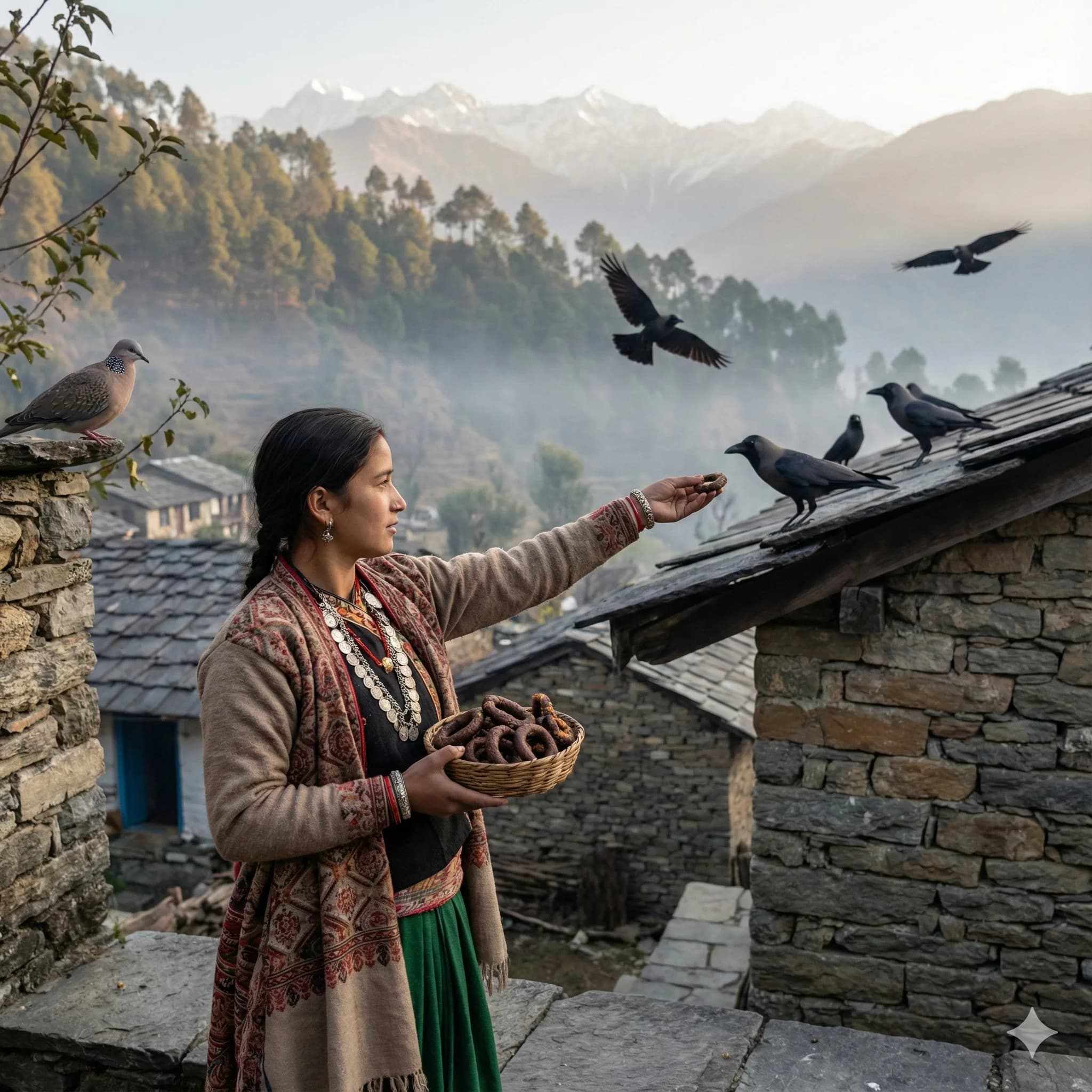
Prepared from wheat flour and jaggery, ghughute are fried and strung into garlands. On the morning of Ghughutiya, children call out “Kale kauwa” and offer these to crows and returning migratory birds — a gesture of gratitude toward nature and ancestors.
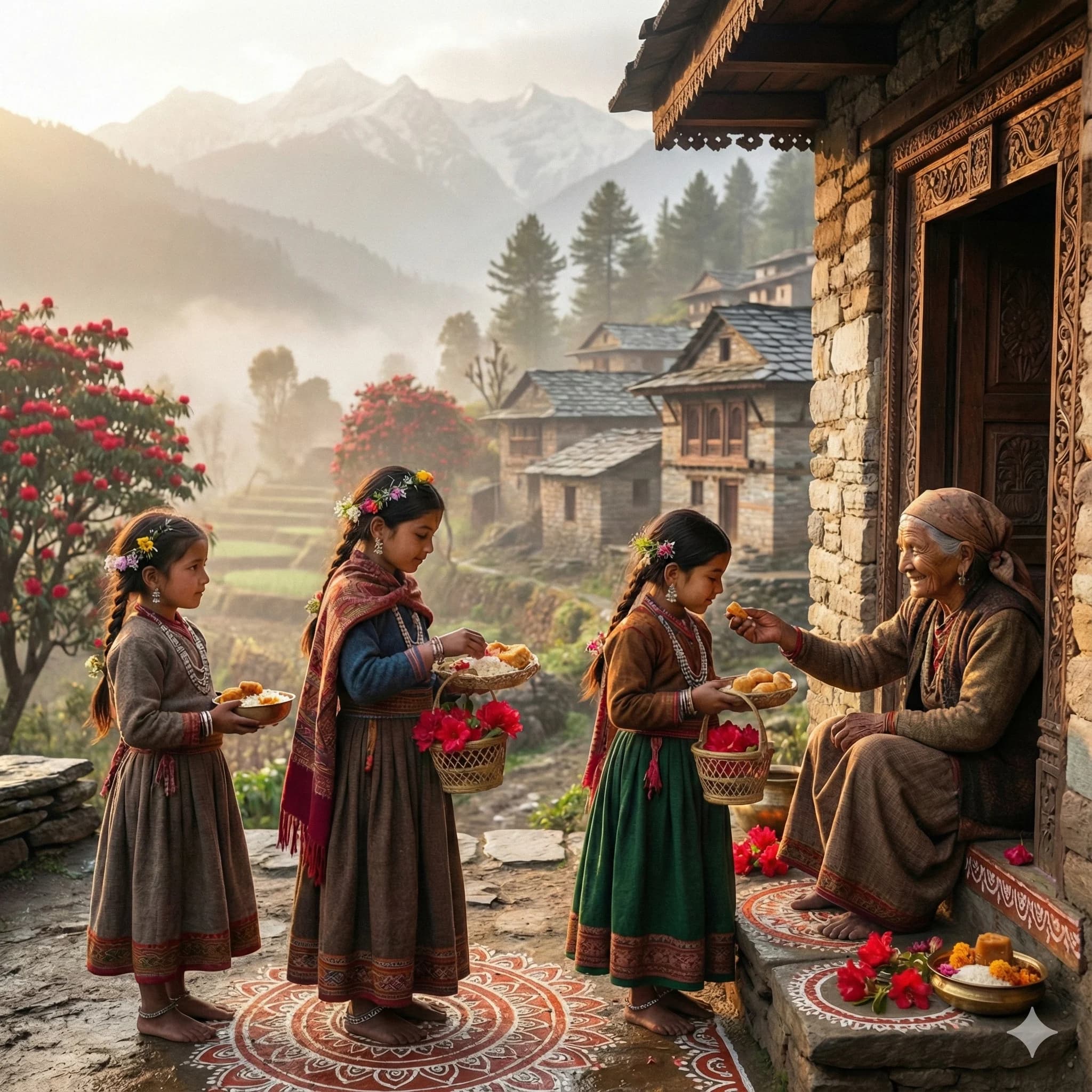
At the start of spring, children go from house to house, placing fresh flowers on doorsteps and singing simple blessing songs. Families give them rice and jaggery and pray for a happy year and a good harvest.
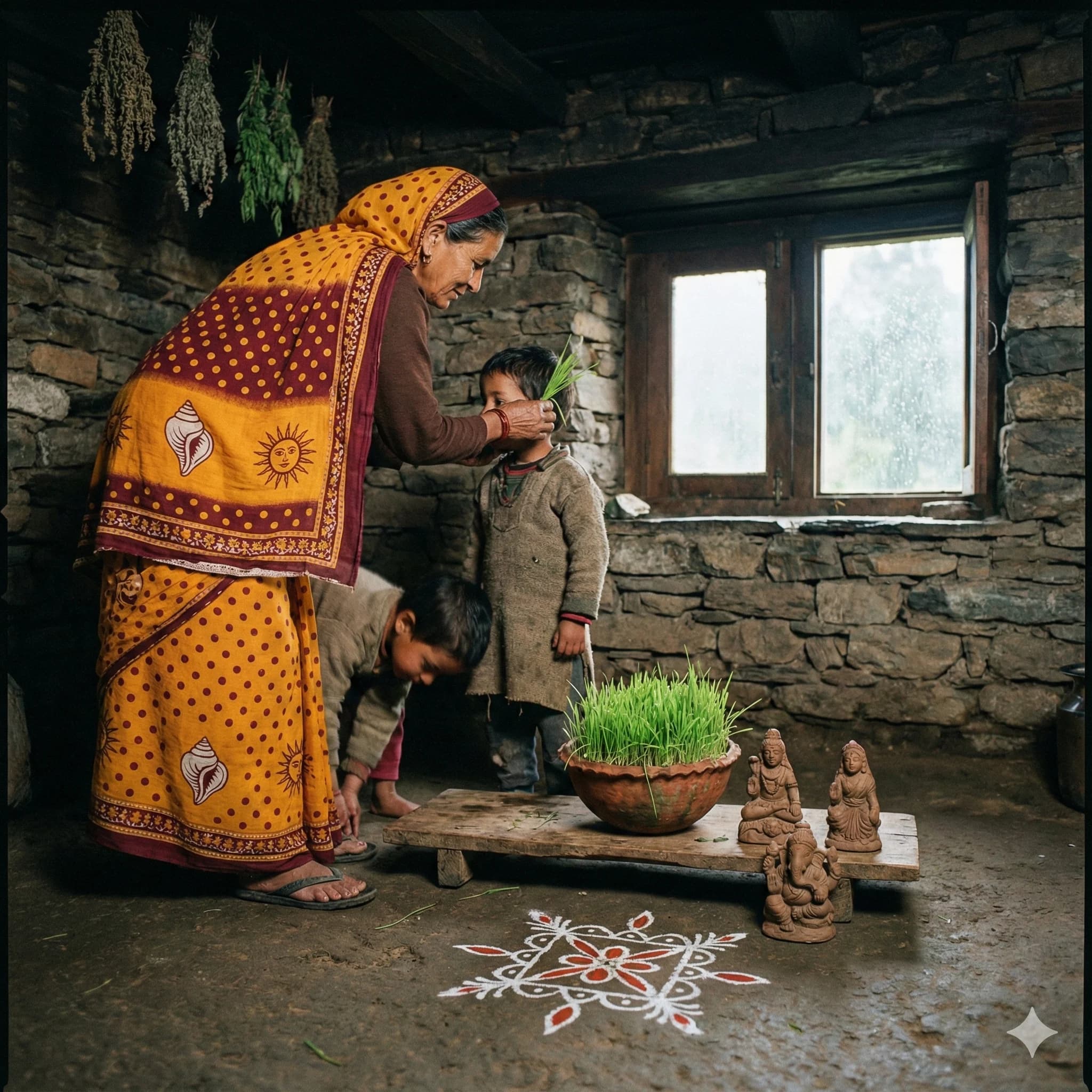
Among the people of Uttarakhand, every season has some festivals, and each festival is celebrated appropriately. Harela is a festival that marks the beginning of the rainy season or monsoon.
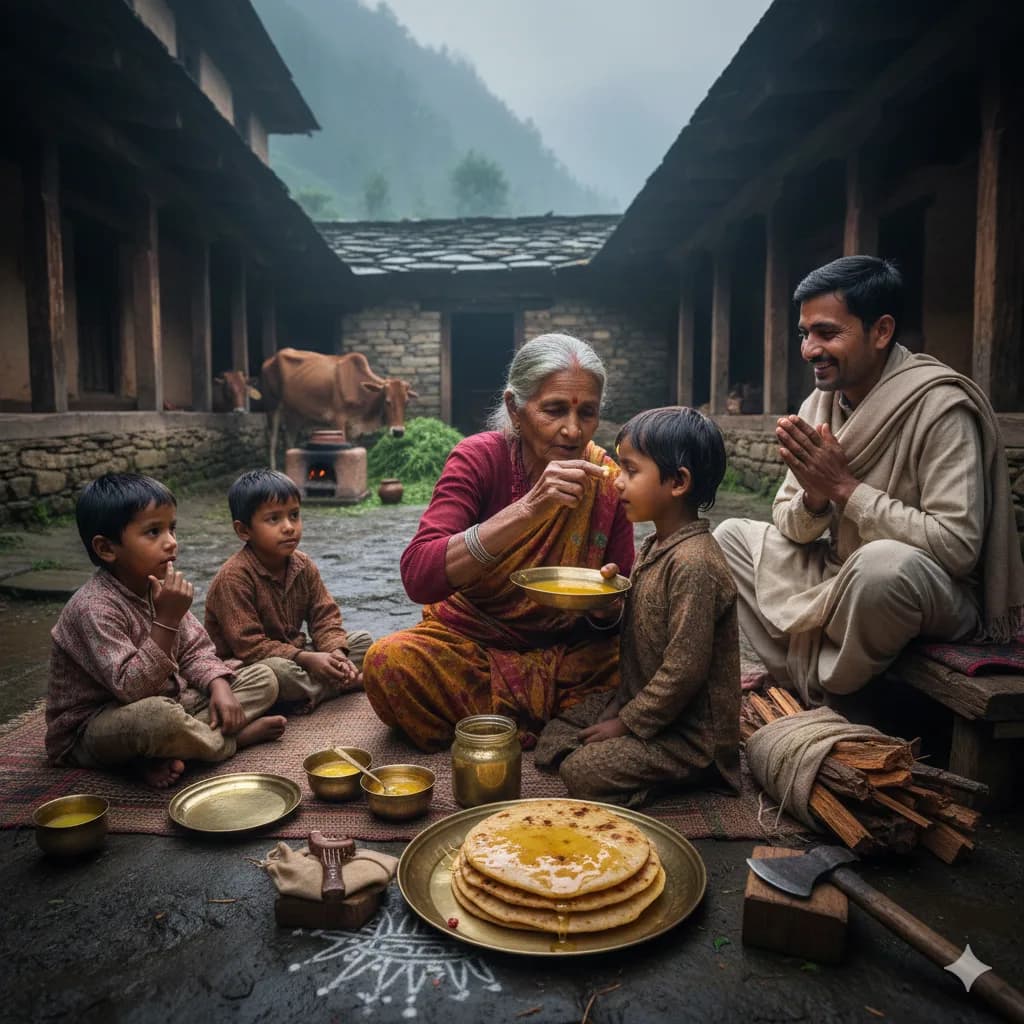
Ghee Sankranti is a festival that portrays the gratitude of the locals who earn a living via the occupation of farming by marking the onset of the harvesting season. It is also known as the 'Olgia' festival and is celebrated on the first day of August (Bhado), a time wherein the crops are thriving, and the milk-laden cattle are ready to be milked.
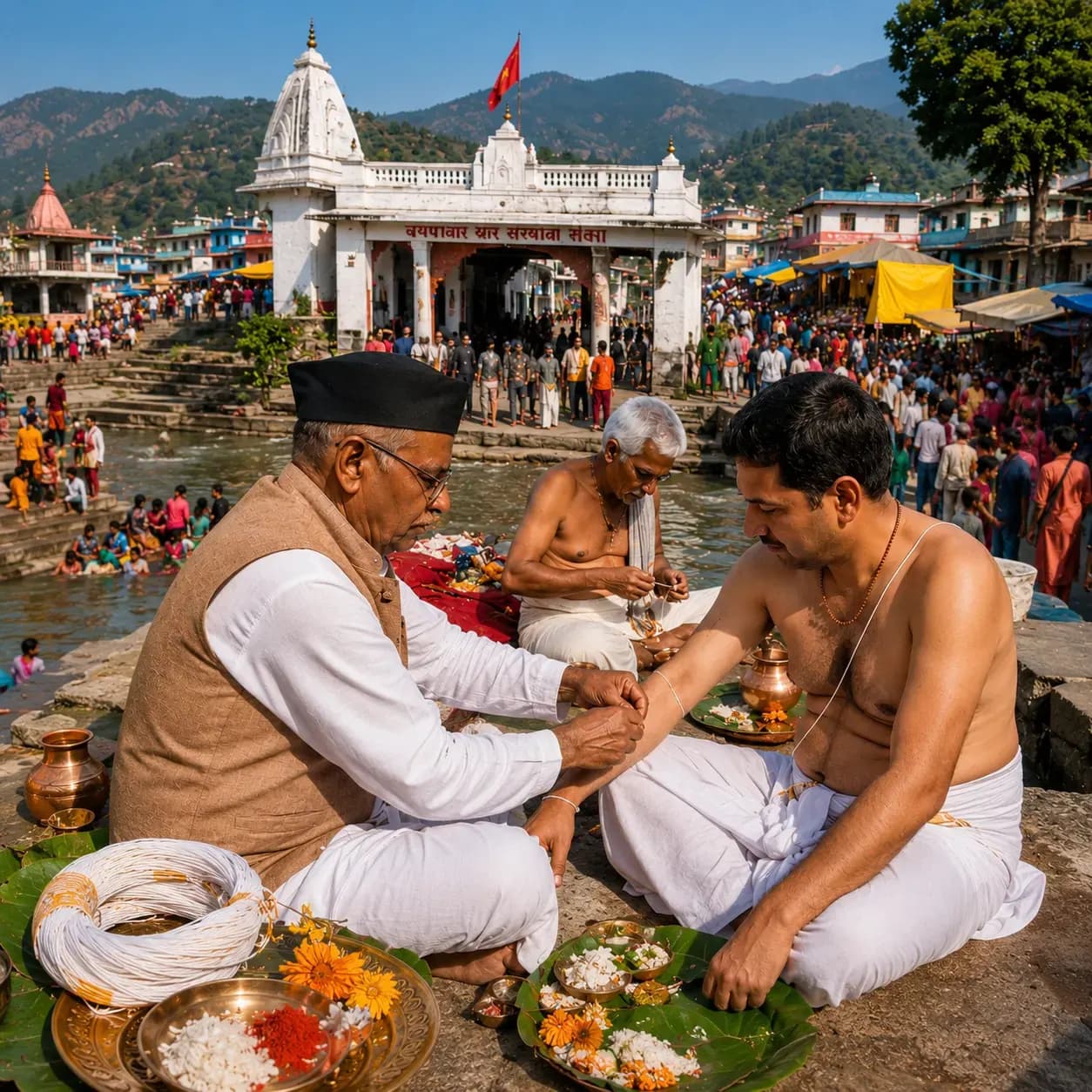
One of the most important festivals of Uttarakhand and the people of Kumaon celebrate Raksha Bandhan and Janopunya on the same day. On this day, people change their janeu (sacred thread worn across the body by Hindu men). The popular Bagwal fair is also held on this day in Champawat.
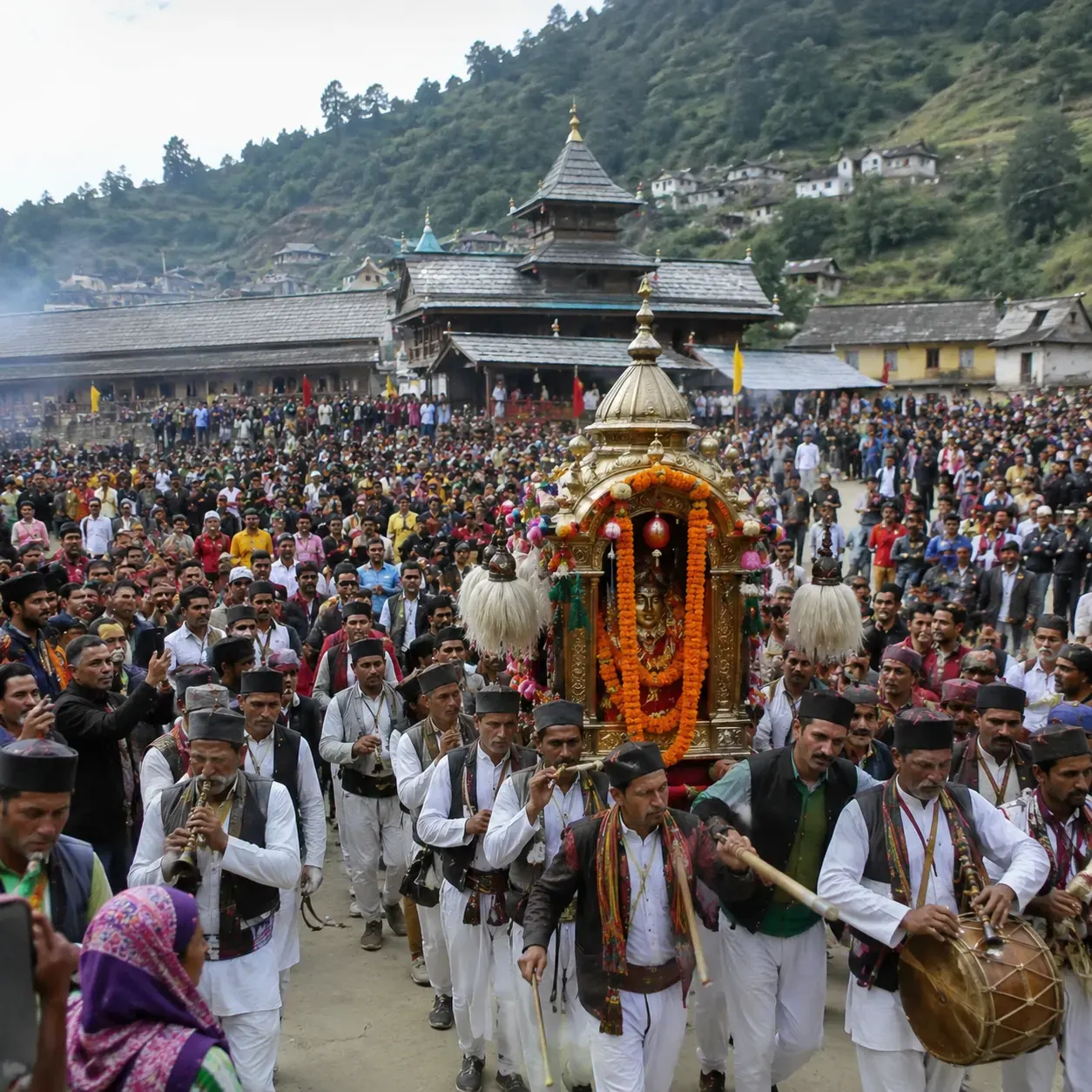
This vibrant festival is held every year in August in the honour of Mahasu Devta in the Jaunsar-Bawar region of Uttarakhand. Mahasu Devta, worshipped as the Lord of Justice, is said to be an avtaar of Lord Shiva, and is highly revered in Uttarakhand. While this festival is celebrated in all temples of the Lord, the most popular one is organised in the Mahasu Devta Temple at Hanol, 95 km from Chakrata.
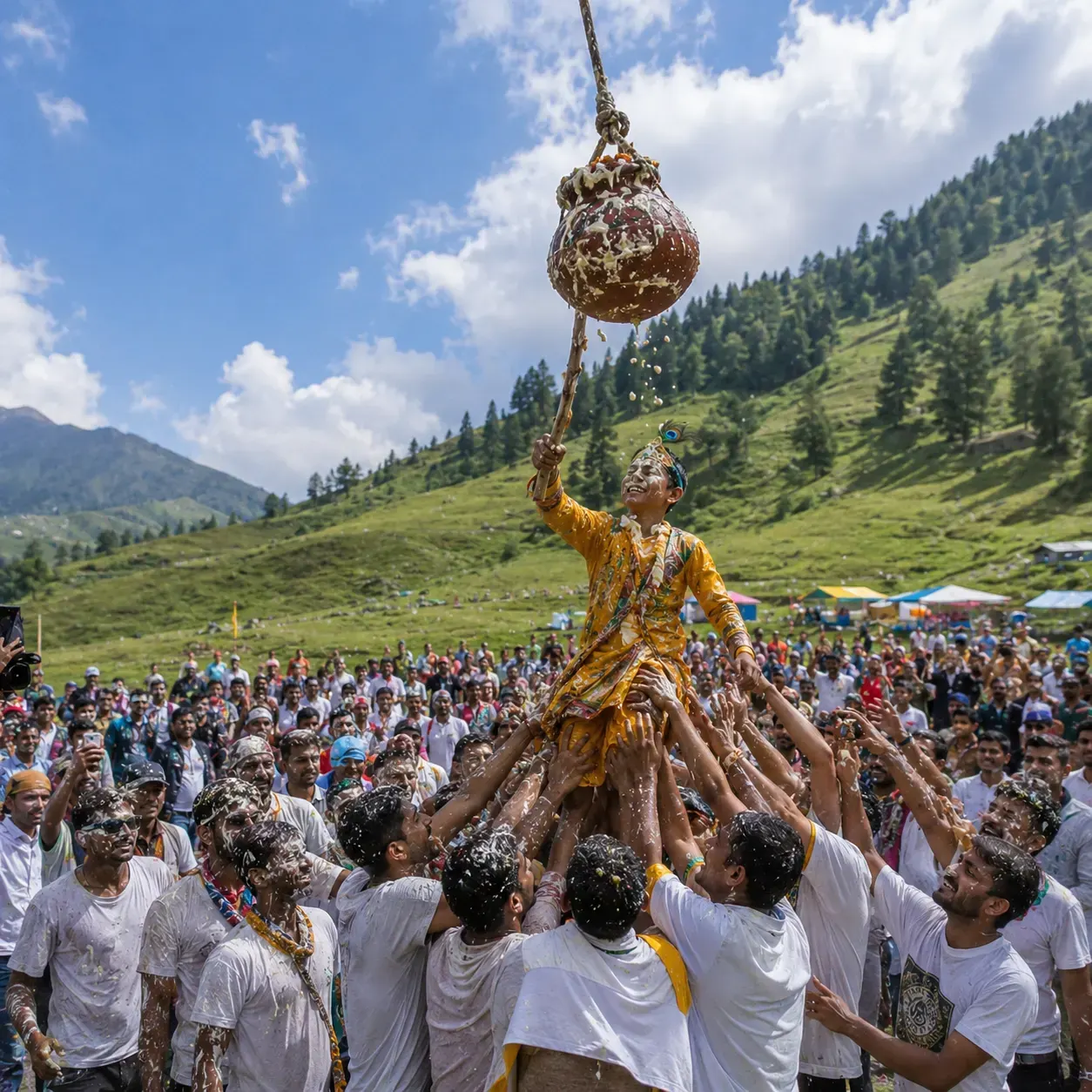
Anduri Utsav or the butter festival is held in Raithal in Uttarkashi district every year to thank Lord Krishna for protecting cattle from evil forces while they were grazing in the open meadows of Dayara Bugyal. Generally held between August and September, during this festival people smear each other with butter, milk and buttermilk.
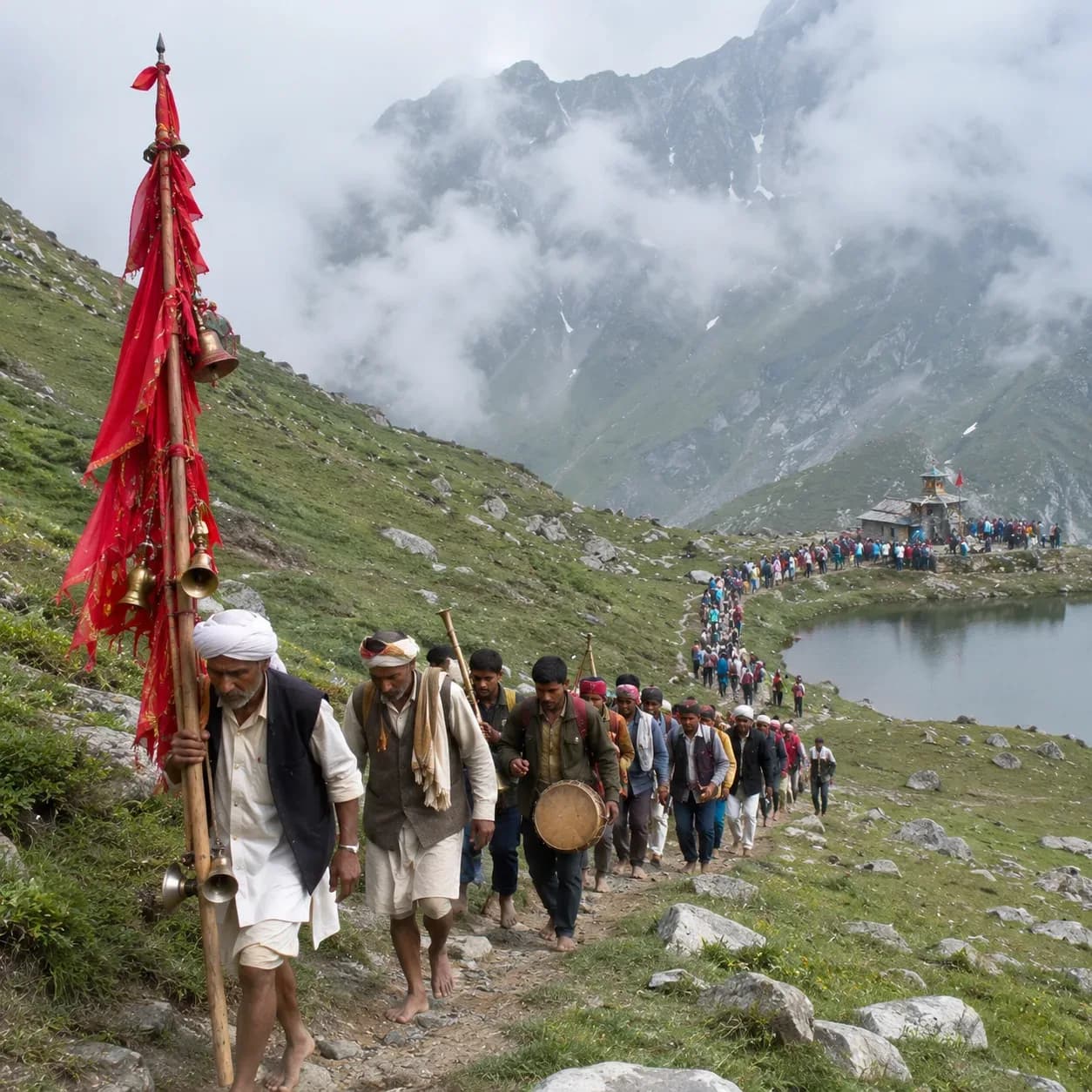
Chhipla Jaat is a festival that is celebrated in August, once in three years, in Chhipla Kote in Pithoragarh district. During this festival, a large number of people from nearby villages congregate and walk to Najurikote in Panchchuli mountains, where the Chhipla Kedar temple is located.
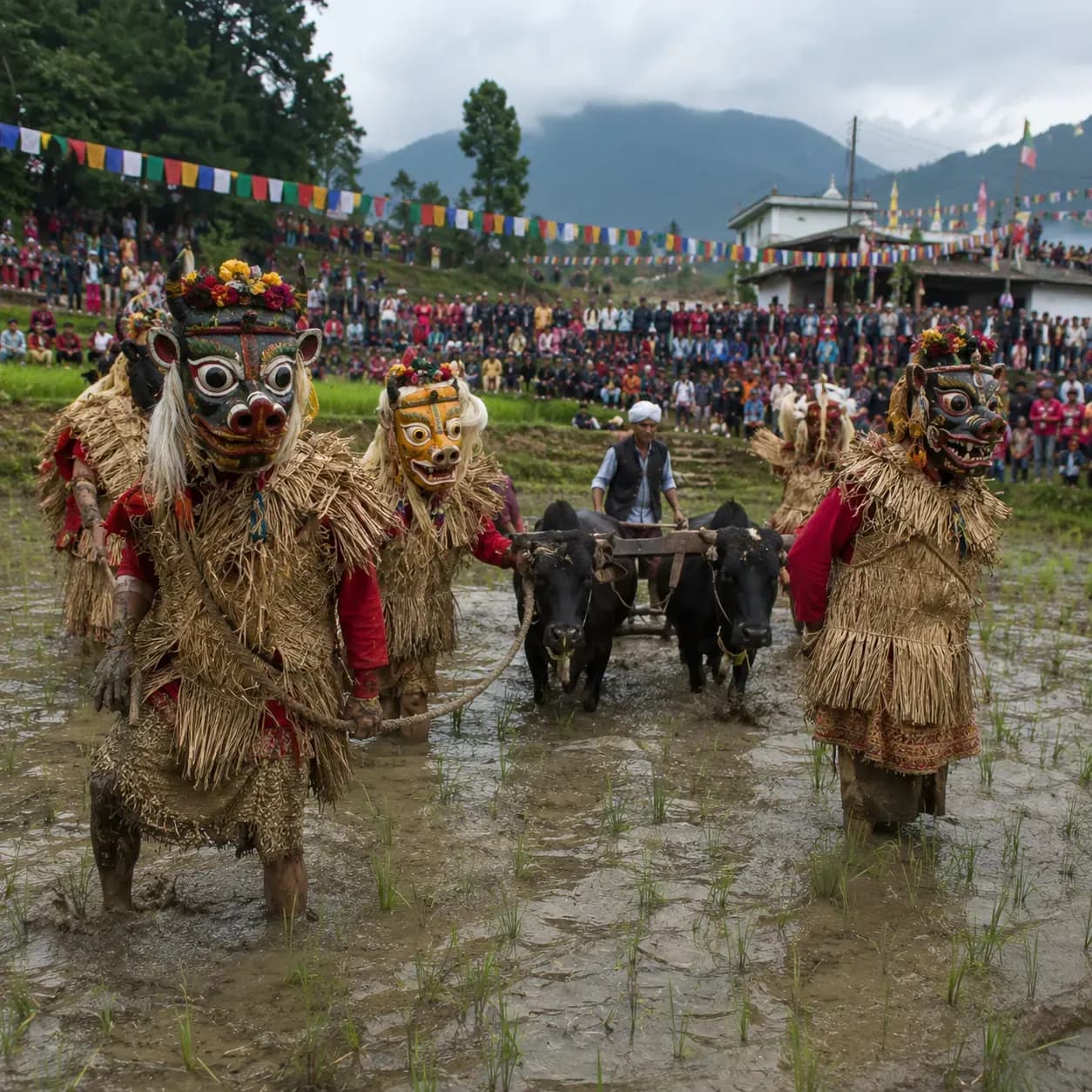
A festival celebrated by farmers in Pithoragarh district, Hilljatra is associated with paddy transplantation, which is held during the rainy season. During this festival, an elaborate masquerade is held to represent various types of agricultural activities and folk legends are enacted by masked dancers, representing the victory of deities over demons.
Dussehra (Vijayadashami) commemorates Lord Rama’s victory over Ravana and the triumph of good over evil. In Uttarakhand, it is marked by Ramlila performances (dramatic retellings of the Ramayana), the burning of Ravana effigies, processions, and fairs. Villagers and townsfolk participate in community events, and it’s also a popular time for seasonal markets and family outings. The date moves each year with the lunar calendar.
Diwali — the Festival of Lights — is celebrated across Uttarakhand with clay lamps (diyas), rangoli, fireworks, Lakshmi puja, and feasts. Homes and temples are cleaned and decorated, sweets and gifts are exchanged, and families gather for prayers and social visits. In the hills, Diwali is also a time to remember ancestors and celebrate the end of the harvest season. (Date follows the Hindu lunar calendar and changes every year.)
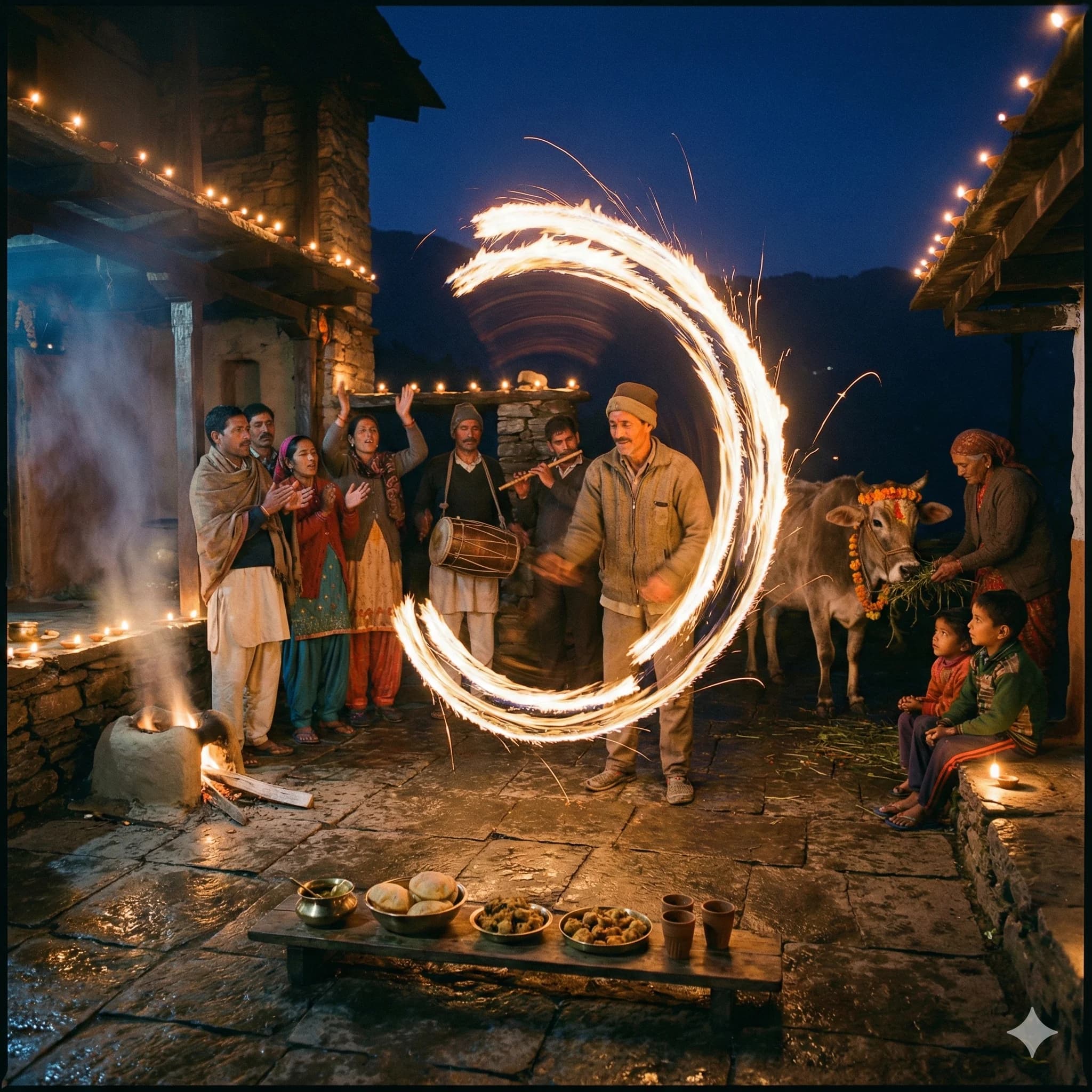
Egaas Bagwal is a unique Uttarakhand festival observed roughly 11 days after Diwali. It is celebrated with singing, dancing, local delicacies, and a striking fire-rope tradition called 'Bhailo' where villagers spin a flaming rope — a dramatic symbol of light’s triumph over darkness. Homes are decorated, families come together for meals and rituals, and traditional folk performances are common. The festival reflects the region’s ancestral customs and communal spirit.
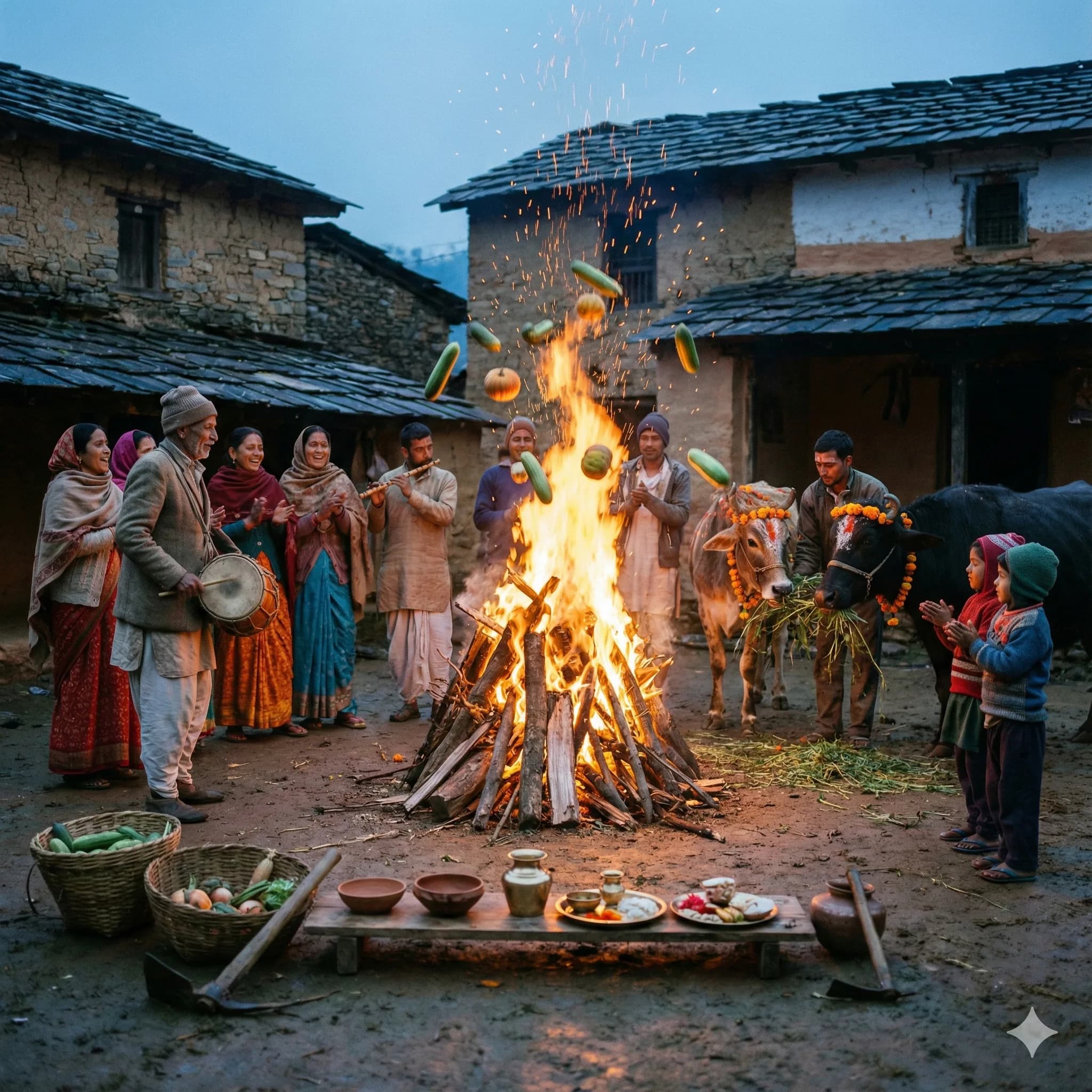
It marks the end of the monsoon season and the beginning of autumn, with activities like lighting bonfires, where people throw produce like cucumbers into the flames, as well as cleaning cattle sheds and feeding animals. The festival is deeply connected to agricultural life, with traditions focused on the well-being of livestock and ensuring a good start to the cooler season.
This Mahayagna is held for 11 days where prayers are offered to please Lord Kartikeya/Kartik Swami. Devotees are offered food throughout this time.
This unique festival of Pithoragarh district coincides with the blooming of the kandali flower, which blooms once every 12 years (it last bloomed in 2011). Celebrated between August and October, during this festival, women symbolically destroy the plant, as per a folk legend.
A festival dedicated to married women of the state, Bhitauli is celebrated in the month of March or April. During this festival, a married woman's brother, parents or any other relative visit her and bring with them sweets, fruits and new clothes. A newly married girl receives her first Bhitauli in the month of Baisakh (April-May), after which it is given each year in the month of Chaitra.
Bat Savitri or Vat Savitri is a festival observed by married women, who fast through the day and pray for their husband's well-being. They offer prayers to Savitri, a legendary figure in Hindu mythology, who is said to have saved her husband from death. Prayers are also offered to the bat or vat (banyan) tree.